
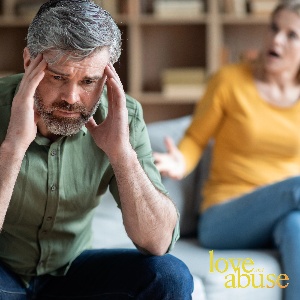
You can’t fix what or who is unwilling to be fixed.
And when someone would rather you and the relationship suffer and crumble than work on improving themselves, you might have only one choice left.
There’s a painful reality that many people face in emotionally abusive relationships. They keep hoping their partner will finally see the damage they’re causing and choose to change.
But what happens when that moment of clarity never comes? And more importantly, what does it mean when someone refuses to look inward even as the relationship crumbles around them?
The truth is, most emotionally abusive people don’t wake up to their behavior until they’re facing the loss of the relationship. It’s not when they see you crying. It’s not when you’re clearly suffering or falling into depression. It’s not even when you tell them directly how much they’re hurting you.
Over 90% of people who choose to change their abusive behavior do so because they’re terrified of losing the relationship.
Up until the threat of losing their relationship becomes real, they don’t think there’s a problem. Or at least, they don’t think it’s a problem worth addressing.
You might wonder why someone who claims to love you wouldn’t see your pain and immediately want to change. Wouldn’t they notice you’ve become a shell of your former self? Wouldn’t they care that you’re losing your passion for life?
The harsh answer is that most won’t reflect on their behavior until the end is imminent. They stay in what I would call a trance, on autopilot, continuing their hurtful, controlling, or manipulative behaviors even while watching you suffer. They’re so focused on maintaining control and getting what they want that your suffering doesn’t register as their responsibility.
The Massive Step Emotionally Abusive People Refuse to Take
When someone has been a certain way their entire life, asking them to change is like asking them to become a completely different person. If they’ve never learned healthy behaviors, if they’ve always coped by hurting others or controlling situations, then healthy relating is foreign territory to them.
Think of it this way. If someone spent their whole life believing their survival depended on doing the opposite of what’s healthy, you’re essentially asking them to go against every instinct they’ve developed. That’s not impossible, but it requires them to take a massive step into becoming someone they’ve never been.
Most emotionally abusive people learned their coping mechanisms in childhood. When they get triggered as adults, they’re relying on old survival mechanisms that made sense when they were young but are destructive in adult relationships. If they were avoidant as children to escape punishment, they might withdraw love and connection as adults to avoid dealing with their insecurities.
For them to heal, they’d need to work on those emotional triggers, which means dismantling a lifetime of coping mechanisms. They’d have to visit the parts of themselves they’ve spent years avoiding. They’d need to face the insecurities they’ve buried under layers of control and anger.
And here’s the problem: Most won’t do it unless something big shakes them from their “trance.”
Change Can Happen When The Threat of Loss is Real
There comes a point in many relationships where you reach your threshold. You’ve had enough. You’re done. This isn’t about being dramatic or making empty threats. It’s about arriving at a place where you finally draw the line.
Imagine someone keeps punching your shoulder. Not hard enough to really hurt, but enough to be annoying. You ask them to stop. They do it again. You ask more firmly. They do it again. You’re trying to be nice because maybe they’re just joking, but it’s starting to hurt, and you’re developing a bruise.
There’s a point where every single person will reach their threshold. With the punching, you will eventually have to stop that behavior, no matter what it takes. Even the nicest, most patient person in the world has a breaking point.
The same is true in emotionally abusive relationships. When you reach that critical mass, when you’ve truly had enough, something shifts. The fog lifts. And suddenly you know exactly what you need to say and do. All the confusion about what to do next, all the questions about how to handle things, they disappear. You become crystal clear.
It’s like seeing a child in immediate danger. You don’t think about it. You just act. You do whatever it takes to protect them. When you reach your threshold in an abusive relationship, that same clarity emerges. You know it’s time to protect yourself.
But here’s what you need to understand about what happens next. The emotionally abusive person’s response will tell you everything you need to know about whether real change is possible.
If they refuse to look inward even when the relationship is ending, you should expect the same behavior you’ve been seeing from this point on. Actually, you should probably expect it to get worse! I know that sounds ominous, and I don’t say it to scare you, but it’s important to understand what you’re dealing with.
When you become less controllable, when you’ve had enough, and you’re not going to continue the relationship, that’s threatening to someone who’s been controlling you. They may escalate their behavior to try to regain that control. They might make things up, accuse you of things you never did, and tell everyone who will listen that you’re the problem.
One person who wrote to me shared that when she finally left her partner of 30 years, he accused her of stealing from him for years. She never did any such thing, but he held onto that belief and spread it to anyone who would listen. He told everyone he couldn’t understand why she left, even though she’d told him repeatedly that he scared her and she was always to blame for everything.
This is what can happen when someone refuses to reflect. They can’t or won’t see their role in the destruction of the relationship. They maintain their “good guy” image by making you the villain.
When You’ve Reached Your Threshold, There are Really Only Two Paths Forward
The first path is that things get worse before they get better. The “better” part comes when you finally break free of the abuse cycle.
But getting there might be challenging. The abusive person might escalate. They might try harder to control you. They might say cruel things to make you doubt yourself.
The second path is that they finally realize they’re the one causing the problems. They admit it, accept it, and become willing to get help and change. This is the path where they snap out of their trance and see clearly for the first time what they’ve been doing.
But here’s what real change looks like, and it’s important to know this so you don’t get fooled by someone who’s just performing: If someone truly wants to heal and change, you’ll see visible changes almost immediately. Not perfection, but a genuine shift in how they respond to situations that used to trigger them: What used to make them rage, withdraw, or punish you no longer has that effect.
And when you see these changes, you need to test those triggers. I know that sounds counterintuitive, especially when things are going well. After all, why would you want to bring up something that might ruin everything? But if you don’t test whether they’ve truly changed, you might get duped by someone who’s learned to act like they’re healing.
I’ve heard from people whose partners listened to this show with them, started doing all the “right” things, and seemed to be changing. Then they got back together, and the old behaviors returned. The partner had been manipulating them by appearing to heal without actually doing the internal work.
Real healing means the person can handle the situations that used to trigger their abusive behavior. If they were jealous before, they need to be able to handle situations that would have triggered that jealousy. If they used to rage when you disagreed with them, they need to be able to disagree respectfully now.
And this change needs to be consistent over time. Not just for a few weeks or months, but sustained. Because anyone can perform for a while. True change shows up in how they handle stress, disappointment, and conflict over the long term.
Why They Won’t Look Inward
The emotionally abusive person who refuses to change is carrying massive insecurities. All their controlling, angry, intimidating behaviors are compensations for what they’re insecure about. They’d rather put others down and make everyone else feel small than deal with what they need to heal in themselves.
It’s interesting that people who bully, who intimidate, who put fear in others, feel powerful when they’re actually covering up how powerless they feel inside. They’re walking around with low-level emotional triggers that can be set off at any moment. They typically only show these behaviors with the closest people in their lives.
Why? Because when you’re in a close relationship, you get near someone’s emotional core. You get close to where their skin is thinnest, where all their vulnerabilities and insecurities live. The more you share with someone, the more vulnerable they feel. And if they’re afraid of that vulnerability, if they’re terrified you might see the real them, they’ll do behaviors to control you from seeing it.
The anger, the control, the manipulation are all ways of keeping that protective wall up. They feel exposed in intimate relationships, so they compensate by making sure you can never get close enough to see what they’re really afraid of.
Most people don’t understand this dynamic. If you’re a compassionate person, which you probably are if you’re reading this, you might focus on their good qualities and make excuses for the bad. You might think about what they’re going through or what happened to them in their past. Your compassion keeps you from seeing the full picture of what’s happening.
But when you only focus on the good and don’t address the hurtful behaviors, when you don’t choose to stop tolerating them or get away from them, you prolong the abuse cycle. You can end up in a relationship that lasts decades, where the abuse never ends.
After the Point of No Return
If you’ve reached your threshold and left, or if you’re considering leaving, you need to understand what comes next. When you leave an emotionally abusive relationship, you’re going to be foggy for a while. You won’t know what’s up or what’s down. You won’t know what reality is anymore.
It typically takes two to four months for that fog to lift. During that time, you’re rewiring your brain to understand what life is again, what reality is. Every thought you’ve had has contained that person:
What are they going to do?
What are they going to say?
What should I do so I don’t upset them?
When you’re without the hurtful behavior, it takes time to remove that variable from your thoughts. That person was like a thorn in every thought you had. When that thorn is removed, the fog lifts. You start having thoughts about what you want for yourself, what you want to do with your life, what you want in your life.
You might even surprise yourself during those first couple of months. You might consider taking them back, or think maybe it wasn’t as bad as you remember. This is normal. This is the fog. This is your brain still trying to make sense of everything.
But once that fog lifts, once you get clear, you’ll know with certainty that you made the right choice. You’ll realize you’d choose to be single for the rest of your life rather than go back to that relationship. You won’t ever let them back into your life again.
And then comes the exciting part, even though it’s also scary. You get to forge the path and build the life you want. You get to discover or rediscover yourself. Even though you had this difficult relationship, the way you rebuild yourself is going to contain a lot of self-love.
Your identity was wrapped up in that relationship. It was you and them and “us.” When they’re gone, “us” is gone. You have two-thirds of your identity to fill up now. But that’s actually a good thing. It allows you to figure out who you are without someone constantly telling you who you should be.
You deserve respect, kindness, and love. You deserve to be accepted exactly as you are. And you deserve a relationship where both people are working on themselves, where both people care about each other’s happiness, where conflict doesn’t mean punishment.
If the person you’re with refuses to look inward, if they won’t reflect even when the relationship is ending, that tells you everything you need to know.
Real change requires someone to face themselves honestly. Without that willingness, nothing will ever truly change.

|
Paul Colaianni
Paul Colaianni is an Emotional Abuse Expert and Behavior and Relationship Specialist who has been analyzing complex relationship dynamics since 2010. As the creator of the Healed Being program and host of the top-rated Love and Abuse and The Overwhelmed Brain podcasts, with over 21 million downloads worldwide, he specializes in helping people recognize hidden manipulation, navigate emotionally abusive relationships, and empower themselves to make informed decisions.
|