
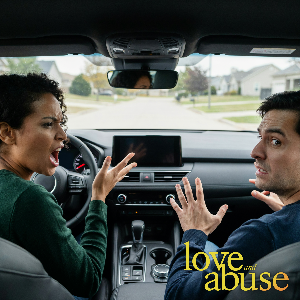
Some people know that intimidation works to keep you compliant.
With people like this, it’s important to remember that their explosive behavior isn’t about losing control – it’s about gaining control over you.
Anger in a relationship can pile on top of other emotionally abusive behaviors and make everything harder to deal with.
At the same time, anger is often easier to identify than subtle manipulation. You can point to someone throwing things or screaming and say, “This is dangerous. This has to stop, or I’m leaving.”
With quieter forms of emotional abuse, you might struggle to pin down exactly what’s wrong. But anger? You can see it, hear it, and feel the fear it creates in your body.
What you’re looking at when someone can’t control their temper is usually a coping mechanism. Instead of reflecting, breathing, processing, or finding healthy ways to release difficult emotions, they explode.
I see this kind of anger as an adult version of a childhood temper tantrum. When someone “loses it,” throws something, or smashes something because they’re not getting what they want, they can sound exactly like a child on the ground crying and demanding their way.
I know this because I was that child once. I remember being about ten years old, getting on the ground, crying, all because I didn’t get what I wanted.
As I worked on my own emotionally abusive behaviors over the years and then helped others work on theirs, I learned that emotional abuse often stems from someone not getting what they want.
These people usually carry this childhood mechanism into their adult relationships, thinking it still works. The unfortunate truth is that it does work – at least in the short term. In other words, when someone like this gets angry enough, the people around them are more likely to do what they want them to do.
That’s why they keep doing it! The solution, however, is that if everyone scattered when they got angry, that person would realize the behavior doesn’t get results.
But when anger is successful in controlling others, there’s no incentive for the person to stop the behaviors. When the angry person gets compliance, the pattern continues.
This doesn’t automatically mean their anger is part of a deliberate abuse strategy. They might genuinely have a bad temper and terrible coping mechanisms. They might not know how to process challenges in healthy ways.
But that’s not an excuse. And it doesn’t make you any safer. Especially when they’re throwing things or kicking holes in walls. You shouldn’t have to worry about getting hurt around someone who’s supposed to care about you and want you to feel safe.
My mom once told me that my stepfather once threw a hammer at her head, and it whizzed by very closely. I now believe she was inches from death that day.
When someone’s anger is that aggressive, getting caught in the crossfire could mean ending up in the hospital or worse. And if you have children, they could be injured too. In other words, the risk is enormous!
When somebody loses their temper, they’re not thinking about all the consequences. They’re not considering what might happen if they hit someone. They’re just angry and want to release that emotional energy.
A person experiencing a childlike temper tantrum puts them in a state where they don’t care about the damage they cause.
I remember my stepfather doing this for years. My mom would clean up broken glass in the morning because he’d thrown his drinking glasses against the wall or onto the floor the night before.
After she cleaned everything up, it might happen again the next night. Or there might be a hole in the wall because he kicked it (now you know why I used that reference earlier).
Growing up, something in our house was always broken. And yes, unfortunately, my mom was physically abused as well. It happened a few times. Not often, fortunately, but one time is too many. Someone with that kind of temper is dangerous to be around.
I realize someone might read this and say, “I have a temper, but I would never hit the person I love.”
Maybe that’s true! If that’s you, maybe you have some conscious thinking happening in those moments, and you find a way to control yourself.
But the people around you don’t know that.
People around the person losing their temper don’t know whether they’re about to get hit. But with anger, there are often accidents. They happen. An angry person can throw something at the floor where it bounces up and hits someone in the face. If you’ve ever faced a very angry person, you know that there are many ways you could get hurt.
If you’re in an angry-abusive environment, you have to treat this as dangerous. And when you’re in a dangerous environment, you have to live differently or get away. You have to live as if you’re always under threat, never knowing when you’ll step on an emotional landmine. It’s truly like being in a war zone – always on guard and never knowing when the danger will ramp up.
Is everyone out of control when they’re angry?
You’ll know if an angry person can control themself if, when they get angry, they say, “I’m really angry. I’m going outside to let off some steam.” That’s control.
We’re all allowed to be angry. You’re allowed to scream. You’re allowed to throw things. But when you do it near people who could get hurt (or aren’t sure what to expect from you), that’s a different story. Control has to be there.
Some abusive people use anger to control you. In fact, they know that when they get angry, you’ll probably do what they want because you don’t want to face the consequences of that anger. You don’t want to see what happens if it gets worse.
This could be conscious, unconscious, or a combination of both. But when the perpetrator is good at using anger to get results, there’s often no accountability for the behavior. The person using anger doesn’t want to be vulnerable enough to look inward and do the personal growth work involved in healing.
I once watched a customer in a store yell at the top of his lungs at a cashier, screaming, “This is the price! You have to honor it!”
It was clear to me, the cashier, and probably everyone else that this guy had swapped price stickers. He was trying to buy expensive software for a fraction of the cost. When the cashier refused to sell it to him at the fake price, this customer made a spectacle. You could hear him throughout the mall.
Even if he really didn’t swap stickers and I (and everyone else in the store that day) was wrong about the sticker swap, why was it necessary to get that loud, that aggressive, and that intimidating toward someone just doing their job?
Seriously. If he was really that upset, he could have written to corporate or talked to a manager.
But he didn’t. He turned it into a performance because some people get their way by making things into spectacles.
The cashier refused to budge. And I’m so glad he didn’t. You could tell this customer used his anger to control others in the past so they’d do what he wanted them to do.
But in this case, when that strategy didn’t work for him, he got even angrier. He ramped up the volume and aggression, digging deeper into his bag of manipulation tools. He started at a low level of anger and kept escalating until he was screaming at the top of his lungs.
His anger also brought in spectators. And it made me wonder if the cashier was going to give in and let the customer have his way. After all, some people don’t like being the center of attention when they’re getting yelled at. They think, “I don’t want to upset anybody else. I better squash this right now. I better give in.”
The cashier didn’t do that. He stood his ground.
I’m not saying you should stand your ground in a violent romantic or family relationship. What I’m saying is that it’s important to understand that some people will use anger to control you. When you know that, you can recognize what’s about to come when they get angry: They want something from you. They want you to do something or agree with something.
And when they don’t get what they want, they might ramp up that anger. When that happens, don’t expect the anger to stop. In fact, if they don’t get their way with the anger they’re showing now, they’re more likely to amplify it and go full force.
And if you end up submitting just to stop the anger, they’ll realize that getting angry with you works.
An abusive person will never stop being abusive as long as they keep getting what they want
That means that, sorry to say, you may inadvertently and reluctantly enable an abuser’s behavior. Not because you’re doing anything wrong, but because you’re trying to keep the peace. And doing that is quite often how the abuser gets what they want.
Once an abuser realizes they can get what they want by doing certain behaviors, there’s no reason for them to stop.
Love and abuse cannot co-exist
Someone who says they love you, says they care about you, and sees you afraid of them, sees you crying, sees you in fear around them, and doesn’t change… that person doesn’t love you. At least, not in the way I define love.
It’s hard to even label it “love” at all. Those who abuse and say they love you are more than likely just trying to fulfill an insecurity inside of them. For example, if they are afraid of abandonment or being alone, they can be controlling and manipulative to make sure you don’t leave them.
Almost all abusive behavior comes from an insecure person trying to create security
When you’re around somebody who says they love you but then abuses you, the only person who matters to them is them.
If they’re nice one day and it feels good to you, it’s because they’re getting what they want and nothing has disappointed them yet. But as soon as they’re disappointed, they’re back to their old harmful behaviors and coping mechanisms.
We all have the ability to control ourselves. It’s a matter of choosing to do so. Sure, anger can push us into a fight-or-flight-like state where we feel like we’re out of control. But when it happens once or twice, we now have a choice to work on that in ourselves (before it happens again) to make sure we don’t ever lose control again – at least when we get angry.
Someone who knows they have an anger problem can absolutely choose to take their anger somewhere else – away from the relationship, outside, to a park to scream, to the gym to use a punching bag. There are many productive ways to handle anger.
But when there’s anger and abuse inside your own house, a place where you’re supposed to feel safe and loved, the angry person is typically and intentionally causing you to feel intimidated because that’s what gets them what they want.
If you’ve separated from someone because of their anger and they’re begging you to come back, pay attention to whether they’ve done any work on themselves.
They said they’ll never do it again. Should I take them back?
If they’ve done nothing to change, nothing to reflect, nothing to process, and they haven’t gone to therapy or gotten help – if they’ve done none of the work and they’re just begging for you to come back – you’re going to end up in the exact same situation as before.
If someone tells you, “I promise I won’t do that again. Please come back,” that’s different from getting help. That’s just saying what you want to hear until you come back.
They might actually mean it when they say it. Some people will say they won’t do it anymore, and they stop the behaviors. But even then, they still need to work on why they’re triggered in the first place. They need to figure out why they get angry and how to stop it. And they likely need to process this with a professional and go through much personal growth and realizations.
But if you’ve broken it off with someone who got angry a lot and you felt like you had to give in to what they wanted, and they’re desperately begging you to come back, know that they aren’t thinking about you. They’re thinking about themselves.
How can I be so sure of that? Is that a fair thing to say?
Someone who has severe and harmful-to-you behavioral problems who isn’t getting help and who begs you to return is more worried about getting you back than working on themselves. And that’s almost always insecurity showing up as desperation and fear that if you don’t come back, they’ll be crushed and alone and afraid (those awful insecurities they have yet to work on).
What should a healing person sound like instead? Something like this:
“I can’t believe I did those things to you. That time I threw that vase and you ducked – no one should ever do that to anyone. I’m actually glad you left because it made me realize I have a lot of work to do on myself. I need help. If I’m capable of doing that to a person I’m supposed to love, someone who’s supposed to trust me and feel safe around me, I have a lot of work to do.”
That’s accountability. It’s not begging you to come back to the war zone. It’s a realization that they need help and that you should stay safe and even stay away from them until they are able to heal and change.
Someone who encourages your safety and supports you taking care of yourself, even if that means you are doing that without them, is someone who loves you.
Here’s what accountability looks like:
“You know when I got upset and embarrassed you in front of your family? That was awful, and I realized the reason I did that was…” Then they fill in that blank with something deeper than (and opposite of) “because you made me so mad.” It has to be something vulnerable about themselves.
Desperate begging for you to come back is fear, not healing
Desperation is insecurity speaking. Begging and pleading for you to return after they’ve harmed you time and time again is actually the opposite of wanting you to feel safe and protected and at a safe distance from danger.
Someone who does this, who tries to convince you that returning is your best option but they’ve done no work or healing, is speaking from a place of terror inside themselves – those insecurities: fear of being alone, fear of abandonment, all the things they still need to work on so they don’t get triggered in the first place.
When someone works on their insecurities, they sound entirely different.
What does a secure person sound like?
“I had a really strong fear of abandonment, and because of that, I used to get jealous. I wouldn’t want you talking to other people you might be attracted to. I had to work on this fear inside of me, and now I feel more secure in myself.”
That’s entirely different than insecurity: “Please come back. I love you. I miss you. Please, please, please. I promise I’ve changed.”
Finally, if the anger is also directed toward your children, you’re in an even more dangerous situation. At that point, I recommend contacting a domestic violence hotline to understand your options.
When children become the target of a violent person, even if they haven’t been physically harmed yet, that’s already too close for comfort.
If you’re in an abusive relationship, especially one where anger is the primary psychological and emotional weapon they are using against you, build an outside support system. Without one, you’re trying to handle everything yourself while also being the victim of these behaviors.
That’s incredibly difficult. So do your best to build that support system, including family members and friends, and have them ready in case you need them right away.
You deserve to wake up every morning taking a deep breath and thinking, “I feel good. I feel good not having to worry about that anymore.” You deserve to feel safe in your own home, around the people who claim to love you.
Anger used as a weapon to control you isn’t love. It’s someone prioritizing their own needs and insecurities over your safety and well-being. And you deserve better than that.

|
Paul Colaianni
Paul Colaianni is an Emotional Abuse Expert and Behavior and Relationship Specialist who has been analyzing complex relationship dynamics since 2010. As the creator of the Healed Being program and host of the top-rated Love and Abuse and The Overwhelmed Brain podcasts, with over 21 million downloads worldwide, he specializes in helping people recognize hidden manipulation, navigate emotionally abusive relationships, and empower themselves to make informed decisions.
|